
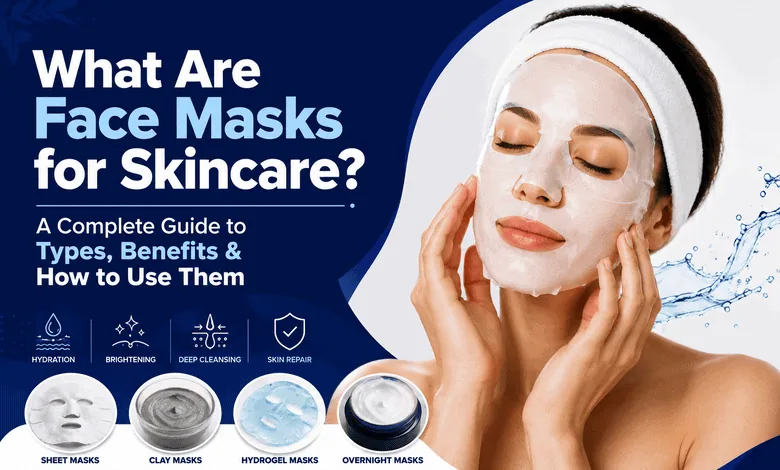
Walk into any beauty aisle or scroll through social media, and you will see them: sheet masks glistening with serum, clay jars promising deep detox, and overnight creams that claim to transform your skin while you sleep. Face masks have become a staple in modern skincare routines, and for good reason.
But what are face masks for skincare, exactly? In simple terms, they are intensive treatments designed to deliver a concentrated dose of active ingredients to the skin. Unlike your daily moisturizer or serum, which you apply and go about your day, a face mask sits on the skin for a defined period — typically 10 to 20 minutes — creating an occlusive barrier that drives ingredients deeper into the epidermis.
The global facial skincare market is projected to grow from USD 107.69 billion in 2025 to USD 178.58 billion by 2034, according to Precedence Research, reflecting how central these products have become in our self-care rituals. Within that market, the sheet face mask segment alone was valued at USD 230.58 million in 2025, with an expected CAGR of 8.76% to 2034 (Market Data Forecast).
This guide covers everything you need to know about what face masks for skincare are, the different face mask types skincare enthusiasts swear by, the real face mask benefits backed by dermatologists, and exactly how to use a face mask to get the most out of every application.
What Are Face Masks for Skincare? Understanding the Basics
At its core, a face mask is a treatment product that stays in contact with the skin for a longer period than your regular skincare. The primary mechanism is occlusion — the mask forms a physical barrier that prevents moisture loss and keeps active ingredients pressed against the skin, enhancing absorption.
How Face Masks Differ from Daily Skincare
The key difference lies in concentration and delivery. Your daily moisturizer is formulated for consistent, long-term use. A face mask, on the other hand, delivers a higher concentration of active ingredients in a single session. Think of it as a booster shot rather than daily maintenance.
Dr. Leslie Baumann, a board-certified dermatologist, explains on SkinTypeSolutions that face masks are not essential for skin health but provide extra self-care and relaxation benefits. The American Academy of Dermatology (AAD) confirms that facial masks can help moisturize, strengthen the skin barrier, and combat signs of aging when used correctly. The AAD emphasizes that because masks cover the skin and aren’t washed off immediately, active ingredients have more time to absorb.
The Science Behind Occlusion
When you apply a mask, you create a sealed environment. This does two things:
- Reduces transepidermal water loss (TEWL), keeping the skin hydrated.
- Increases skin temperature slightly, which can enhance the penetration of certain ingredients.
A multi-center clinical trial published in the Journal of Cosmetic Dermatology (2025) found that a facial mask showed a 53.86% increase in skin hydration after 12 weeks of regular use. That is not just marketing — it is real, measurable data.
A Brief History of Masking
The practice of applying substances to the face for beauty and health is ancient. Egyptians used clay masks thousands of years ago. Cleopatra was rumored to use mud from the Dead Sea. In the 20th century, Western beauty brands introduced cream masks and clay formulas. The modern sheet mask explosion came from Korea in the 2000s, and today, the category includes everything from hydrogel to PDRN-infused overnight treatments.
Key Benefits of Using Face Masks
Understanding the face mask benefits helps you choose the right product for your goals. Here is what the evidence and expert consensus say.
Intense Hydration and Moisturization
This is the most universal benefit. Ingredients like hyaluronic acid, glycerin, and ceramides lock moisture into the skin. The occlusive nature of a mask supercharges these humectants. In the clinical trial mentioned earlier, the 53.86% hydration increase demonstrates just how effective they can be.
Deep Cleansing and Pore Refinement
Clay masks and masks containing charcoal or salicylic acid work by absorbing excess oil and drawing out impurities from pores. Kaolin and bentonite clays are particularly effective for this. The AAD recommends clay masks for oily and acne-prone skin types.
Targeted Treatment for Specific Concerns
Whether you are dealing with hyperpigmentation, acne, or fine lines, there is a mask formulated for that. Ingredients like vitamin C and kojic acid target dark spots, while salicylic acid and benzoyl peroxide address breakouts. For anti-aging, the AAD suggests looking for AHAs, vitamin C, peptides, and bakuchiol.
Skin Barrier Support and Repair
Cream and overnight masks often contain ingredients like shea butter, ceramides, and fatty acids that reinforce the skin barrier. A compromised barrier leads to transepidermal water loss, sensitivity, and inflammation. Regular use of a barrier-supporting mask can help restore balance.
Relaxation and Self-Care
Let us not dismiss the psychological benefit. Taking 15 minutes to apply a mask, lie down, and disconnect from screens is a form of active self-care. The AAD notes that face masks are not a substitute for medical treatments like prescription acne medication, but they provide a boost alongside your regular routine.
Dermatologists confirm that masks can help when used correctly alongside a regular skincare routine. The key is choosing the right formula for your skin type and not overdoing it.
The Main Types of Face Masks Explained
There are seven major face mask types skincare enthusiasts regularly use. Each has a distinct texture, application method, and best-use scenario.
Sheet Masks
Sheet masks are single-use fabric masks (cotton, microfiber, or Tencel) pre-soaked in serum or essence. They are incredibly popular because they are mess-free and deliver a high volume of liquid active ingredients directly to the skin.
- Best for: Hydration, brightening, soothing
- Key ingredients: Hyaluronic acid, vitamin C, ceramides, PDRN
- How to use: Unfold, align with face shape, press gently, leave on 15–20 minutes, then remove and pat in remaining serum
Sheet masks are lightweight and ideal for a quick hydration boost. According to masque.bar, sheet masks are made with water-based serums infused with herbal extracts and vitamins. They are not designed for deep cleansing but excel at delivering moisture.
Hydrogel Masks
Hydrogel masks are made from a jelly-like material that contours tightly to the face. They hold more essence than sheet masks — about 50% more, according to Ebanel — and do not dry out as quickly, allowing for longer wear times.
- Best for: Sensitive skin, dehydrated skin, post-sun exposure
- Key ingredients: Hyaluronic acid, collagen, aloe vera, PDRN
- How to use: Apply to clean skin, leave on 30–60 minutes, remove and massage in excess
The sheet mask vs hydrogel mask debate often comes down to preference. Sheet masks are lighter and quicker; hydrogel masks provide a cooling, spa-like feel and better adhesion. If you have sensitive skin that reacts to friction, hydrogel is the gentler choice.
Clay & Mud Masks
Clay masks are among the oldest forms of face masks. They work by absorbing excess oil and drawing out impurities from deep within pores. Mud masks are similar but often richer in minerals.
- Best for: Oily, acne-prone, and combination skin
- Key ingredients: Kaolin clay, bentonite, charcoal, sulfur
- How to use: Apply a thin layer, avoid eye area, leave on 10–15 minutes (do not let it dry completely), rinse with warm water
The clay mask benefits are well-documented: they refine pores, reduce surface oil, and improve skin texture. Healthline notes that clay masks are especially effective for oily and acne-prone skin types.
Cream & Overnight Masks
Cream masks and overnight (sleeping) masks have a rich, emollient texture. They are designed to deliver deep nourishment over an extended period.
- Best for: Dry, dehydrated, and mature skin
- Key ingredients: Shea butter, ceramides, peptides, PDRN
- How to use: Apply a thin layer after cleansing, leave on for 10–20 minutes (rinse-off versions) or overnight (no-rinse versions)
If you are looking for a high-performance overnight option, the Douce Aura Overnight Mask from Pier Augé is worth considering. It combines High-purity PDRN with Arctic Cloudberry and Omega-6/9 fatty acids to deliver intense overnight repair. Clinical data shows a +52.69% boost in radiance and +45.86% hydration surge in just 15 minutes, with a -20.69% reduction in wrinkle depth over 14 days. It transitions from a creamy texture to a transparent veil that absorbs fully, so you do not have to rinse it off.
Peel-Off Masks
Peel-off masks dry into a flexible film that you peel away, removing dead skin cells and surface impurities.
- Best for: Smoothing texture, mild exfoliation
- Key ingredients: Charcoal, hyaluronic acid, collagen
- How to use: Apply evenly, wait 15–20 minutes until dry, peel from the edges inward
- Frequency: 1–2 times per week
Peel-off masks can be satisfying but should be used gently. Pulling too aggressively can damage the skin barrier.
Gel Masks
Gel masks are lightweight, water-based formulas that feel cooling on the skin. They are often formulated with antioxidants and soothing ingredients.
- Best for: Sensitive, irritated, or reddened skin
- Key ingredients: Aloe vera, green tea, hyaluronic acid, bisabolol
- How to use: Spread evenly, leave on 10–15 minutes, rinse or wipe off
According to masque.bar, gel masks reduce irritation and redness while providing hydration. They are suitable for all skin types but shine when skin needs calming.
Exfoliating Masks
These masks contain chemical exfoliants such as AHAs (glycolic, lactic), BHAs (salicylic acid), or fruit enzymes (papaya, pineapple) that dissolve dead skin cells.
- Best for: Dull skin, uneven texture, hyperpigmentation
- Key ingredients: Glycolic acid, salicylic acid, lactic acid, papain
- How to use: Apply thin layer, leave on 5–10 minutes (adjust based on sensitivity), rinse thoroughly
- Frequency: Once per week maximum
The AAD warns that over-exfoliating can damage the skin barrier. Stick to once a week, and avoid combining with other strong actives like retinol on the same night.
How to Choose the Right Face Mask for Your Skin Type
Selecting a face mask for skin type is the single most important factor in getting results. Here is a breakdown by skin type.
| Skin Type | Recommended Mask Types | Key Ingredients to Look For | Ingredients to Avoid |
|---|---|---|---|
| Dry Skin | Cream, overnight, hydrogel | Hyaluronic acid, ceramides, shea butter, glycerin, PDRN | Clay, charcoal, alcohol, sulfates |
| Oily/Acne-Prone | Clay, charcoal, exfoliating (BHA) | Kaolin, bentonite, salicylic acid, niacinamide | Heavy oils, fragrance, coconut oil |
| Sensitive Skin | Hydrogel, gel, soothing cream | Aloe, bisabolol, colloidal oatmeal, ceramides, PDRN | Fragrance, essential oils, strong AHAs, alcohol |
| Combination Skin | Multi-mask (clay on T-zone, hydrating on cheeks) | Varies by area | One-size-fits-all masks that neglect either dry or oily zones |
| Mature Skin | Anti-aging sheet masks, hydrogel, overnight | Vitamin C, peptides, bakuchiol, PDRN, collagen | Harsh exfoliants, drying clays |
Multi-Masking Strategy
If you have combination skin, multi-masking is a smart approach. Apply a clay mask to your T-zone (forehead, nose, chin) to control oil, and a hydrating cream or gel mask to your cheeks and jawline. The AAD supports this approach as a way to address multiple concerns simultaneously.
Ingredients to Avoid
The AAD recommends avoiding fragrance, essential oils, rubbing alcohol, and physical exfoliants like walnut shells — especially for sensitive skin. These ingredients can cause irritation, dryness, or even breakouts.
How to Use a Face Mask Correctly
Knowing how to use a face mask properly makes the difference between glowing results and wasted product. Follow these steps.
Step 1: Cleanse Thoroughly
Always start with a clean face. If you wear makeup or sunscreen, double cleanse — first with an oil-based cleanser, then a water-based one. This ensures no residue blocks the mask’s active ingredients.
Step 2: Apply the Mask Evenly
- Sheet/hydrogel masks: Unfold and align with your face contours. Press gently to remove air bubbles.
- Cream/gel/clay masks: Use clean fingers or a spatula. Apply an even, “pantyhose-thin” layer (as Eminence Organics describes) from the upper neck upward, avoiding the lips, eyes, and brows.
- For clay masks: A quarter-sized amount is usually sufficient.
Step 3: Leave On for the Right Duration
Most masks should be left on for 10 to 20 minutes. Hydrogel masks can go 30–60 minutes because they do not dry out. Overnight masks are the exception — they are designed to be left on for 8 hours.
Do not leave clay or exfoliating masks on longer than recommended. They can over-dry or irritate the skin if left too long.
Step 4: Remove Correctly
- Rinse-off masks: Use lukewarm water and gentle circular motions. Pat dry with a soft towel.
- Sheet masks: Gently peel off and pat the remaining serum into the skin. Do not rinse.
- Peel-off masks: Start at the edges and peel inward gently.
- Overnight masks: Do not rinse unless the label says otherwise. Massage in excess after 15–30 minutes.
Step 5: Follow with Moisturizer
After removing a mask, your skin is primed to absorb further products. Apply a moisturizer while the skin is still slightly damp to lock in hydration. According to Healthline, this step is essential — especially after clay or exfoliating masks that may temporarily disrupt the barrier.
When to Use a Face Mask in Your Routine
The sequence is: Cleanse → Mask → Tone (optional) → Serum → Moisturizer → Oil (if needed) . For overnight masks, they replace the moisturizer step.
How Often Should You Use a Face Mask?
Frequency depends on the mask type and your skin’s tolerance. Here is a general guideline:
- Sheet masks: 2–3 times per week, or daily if using gentle hydration formulas
- Hydrogel masks: 2–3 times per week
- Clay masks: Once per week (less if you have dry skin)
- Exfoliating masks: Once per week maximum
- Cream/overnight masks: 2–3 times per week, or daily if using as a night cream
The AAD warns that overusing masks — especially those with strong active ingredients — can lead to irritation, dryness, breakouts, and a compromised skin barrier. “Listen to your skin” is not just a cliché; it is sound advice. If your skin feels tight, red, or stings after a mask, reduce frequency.
Beyond Basic Masks — Advanced Skincare with PDRN Technology
Once you have mastered the basics, it is worth exploring next-generation ingredients that take masking to a deeper level.
One of the most promising advances in recent decades is PDRN (polydeoxyribonucleotide) . Originally developed for wound healing in medical settings, PDRN is now used in advanced skincare for its regenerative properties.
Pier Augé, a French pharmaceutical heritage brand founded in 1961, pioneered the use of High-purity PDRN in cosmetics. Sourced from wild salmon milt and refined to 99% purity, their PDRN shares 98% similarity to human DNA. This biomimetic structure allows it to function as a cellular signaling molecule on the skin.
When formulated into a mask, PDRN can:
- Stimulate collagen synthesis
- Activate the skin’s intrinsic regeneration capacity
- Provide lasting hydration
- Enhance skin softness and elasticity
The Douce Aura Overnight Mask mentioned earlier is an excellent example of a PDRN hydrating mask that delivers these benefits while you sleep.
For a deeper dive into how PDRN compares across formats, check out our guide on the best PDRN daily mask: hydrogel vs sheet vs cream mask.
Frequently Asked Questions
Q1: What are face masks for skincare and do they really work?
Face masks are concentrated treatments that deliver active ingredients through occlusion. Yes, they work — the AAD confirms they can moisturize, strengthen the skin barrier, and combat signs of aging. A clinical trial published in the Journal of Cosmetic Dermatology (2025) showed a 53.86% increase in hydration after 12 weeks of use. However, they are not a substitute for a consistent daily routine or medical treatments.
Q2: Which face mask is best for acne-prone skin?
Clay masks (kaolin or bentonite) and exfoliating masks containing salicylic acid (BHA) are the most effective for acne-prone skin. The AAD recommends these ingredients for oily and acne-prone types. Use clay masks once a week and BHA masks no more than once per week to avoid over-drying.
Q3: Can I use a face mask every day?
It depends on the type. Gentle sheet masks and hydration-focused hydrogel masks can be used daily. Clay, exfoliating, and peel-off masks should be used 1–2 times per week maximum. Overuse, especially of strong active ingredients, can damage the skin barrier.
Q4: Should I wash my face after using a sheet mask?
No. After removing a sheet mask, gently pat the remaining serum into your skin. The AAD confirms that sheet masks do not require rinsing. If you feel sticky or congested, you can lightly rinse with water, but this reduces the mask’s efficacy.
Q5: What’s the difference between a sheet mask and a hydrogel mask?
Sheet masks are made of fabric (cotton, microfiber, Tencel) soaked in serum. They are lightweight and great for quick hydration. Hydrogel masks are made of a jelly-like material that holds 50% more essence (Ebanel) and contours tightly to the face. They offer a cooling effect and can be worn longer without drying out.
Q6: How long should I leave a face mask on?
Most masks: 10–20 minutes. Hydrogel masks: 30–60 minutes. Overnight masks: leave on for 8 hours. Do not exceed the label’s recommended time — especially for clay or exfoliating masks — as this can cause dryness and irritation.
Q7: Can I use multiple masks at the same time?
Yes — this is called multi-masking. Apply different masks to different areas of your face based on your skin’s needs. For example, a clay mask on the oily T-zone and a hydrating cream mask on dry cheeks. The AAD supports this approach.
Q8: Are expensive face masks better than drugstore options?
Price does not guarantee quality, according to Healthline. What matters is the formulation and ingredient quality. Some drugstore masks are excellent, while some luxury masks are overpriced. Look for proven active ingredients tailored to your skin type rather than relying on price as a quality indicator.
Conclusion
Face masks are powerful tools for targeted skincare. They deliver concentrated active ingredients through occlusion, providing real, measurable benefits like hydration, pore refinement, barrier support, and radiance — backed by dermatologists and clinical data.
The key to success is matching the mask type to your skin concerns: clay for oil control, cream and hydrogel for hydration, exfoliating masks for texture, and advanced formulas like PDRN-infused overnight masks for regeneration. Always patch test, follow timing instructions, and moisturize afterward.
Now that you know what face masks for skincare are and how to use them effectively, you can build a masking routine that complements your regular skincare regimen. Start with one or two masks that target your primary concern, use them consistently at the right frequency, and your skin will thank you.