
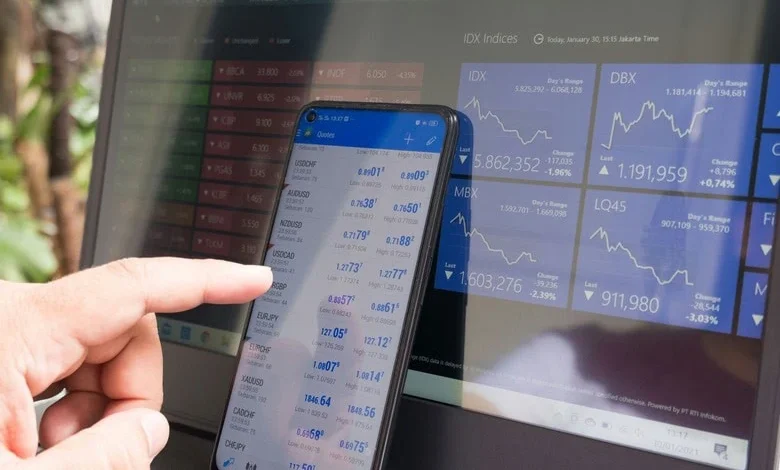
Two people are staring at screens, processing information under time pressure, making decisions with real money on the line and managing the emotional weight of being wrong. One is a day trader. The other is a betting enthusiast. The gap between them is narrower than most people assume.
The foundation of day trading is research. Earnings reports, price movements, sector news, macroeconomic signals. A trader builds a picture from available data and makes a judgment call about where things are headed. The quality of that picture determines the quality of the decision far more than luck does over any meaningful stretch of time. Truth is, sport betting works exactly the same way. Recent form, head-to-head records, team news, conditions, motivation. A bettor who does the work is making a fundamentally different kind of decision than one who picks a team because they like the kit. The information is different in content but identical in function. It exists to reduce uncertainty, not eliminate it.
The crucial distinction between disciplined speculation and guesswork lies in the fact that you can actively influence your chances of success through strategy, discipline and well-grounded analysis. This principle that applies just as cleanly to sport betting as it does to financial markets. Neither guarantees a winning outcome on any individual position. Both reward consistent process over time.
Position Sizing and Stake Management Are the Same Discipline
Ask any experienced day trader what separates long-term profitable traders from the ones who exhaust their capital in six months and the answer is almost never stock selection. It’s position sizing. Committing too much capital to a single trade (however convincing the setup looks) is how disciplined strategies unravel.
Sport betting has an exact equivalent. Staking more than your bankroll can absorb on a single bet, regardless of how confident you feel about it, is the fastest route to a a bad run becoming significantly harder to manage. The logic of spreading risk across positions rather than concentrating it in one place applies whether the instrument is a stock or a match result.
Prediction markets and sport betting moved further into the mainstream in 2026, growing fast and with that has come a growing overlap between the two worlds. Platforms built for financial speculation are increasingly offering sports-adjacent products, and the audience moving between the two activities is growing. The skill sets transfer more than people expect.
The Psychology Is Where the Real Overlap Lives
This is where the comparison gets genuinely interesting. Day traders and sport bettors face identical psychological challenges, and the ones who manage them well are the ones who stay in the game long term.
Loss aversion is the big one. The instinct to chase a loss (to take on more risk immediately after a bad outcome in order to recover) is universal across both activities and destructive in both. A trader who doubles down after a losing position because the emotional need to be right overrides the analytical case for the trade is making a decision driven by psychology, not data. The sport bettor who builds a larger accumulator the weekend after a slip falls on the final game is doing precisely the same thing.
Overconfidence runs in the other direction. A strong run produces the feeling that your judgment has become sharper than it actually has. Fast feedback and gamified interfaces encourage emotional decisions rather than disciplined strategy, true of trading apps and sport betting platforms alike. The antidote in both cases is the same: evaluate decisions on the quality of the process, not the outcome of the last few positions.
Where the Two Disciplines Actually Diverge
The parallels are real but so are the differences, and glossing over them doesn’t serve anyone well. A trader can stop a loss-making position at any time. If shares were bought at $25, a stop can be set at $24. In sport betting, it is often impossible to exit a bet that has already been placed. That asymmetry matters. Once a wager is confirmed, the decision is locked in.
Markets also operate continuously, which means a trader can respond to new information in real time across a session. Sport betting on pre-match markets closes at kick-off. The information window shuts and then the outcome plays out. That difference in structure changes how you think about the research phase. There’s no adjusting a sport bet mid-match on a pre-game selection, which puts more weight on the quality of preparation beforehand.
Both disciplines also carry a house edge or spread that works against the participant. Being aware of that built-in friction is part of what separates thoughtful participation from uninformed participation in either context.
The Mindset Is the Transferable Asset
What practitioners of sport betting from around the world have in common with day traders is the mindset that the activity rewards: patience, analytical rigor, emotional control and respect for risk. Platforms bring that same framework to a wide range of sporting markets. Whether you’re building a trading strategy or a weekend slip, the mental architecture for doing it well is largely the same.