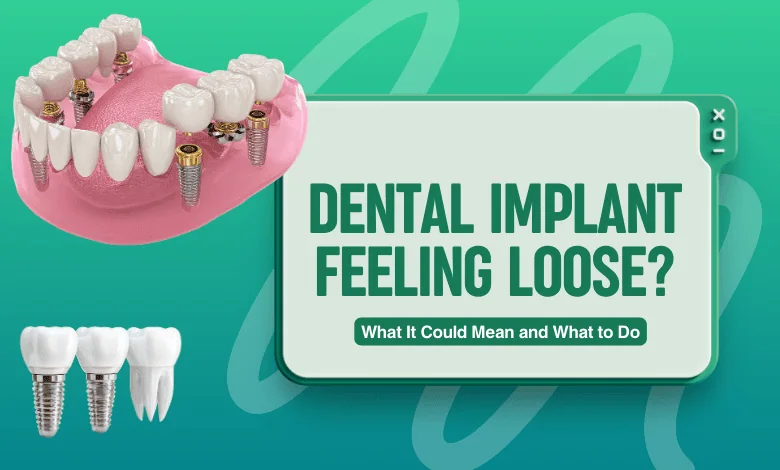
Dental implants are designed to feel like natural, stable teeth. So when one starts to move, it can be alarming. However, a loose or “wobbly” sensation doesn’t always mean the implant has failed. Different types of movement can have different causes, and knowing which is which helps you react calmly and correctly.
Slight movement soon after surgery: often part of the process
If you notice a bit of movement shortly after the dental implant has been placed, don’t panic. In many cases, this light “give” can be connected with the early healing phase. During the first weeks, the implant is still bonding with the jawbone, a process called osseointegration. As this connection strengthens, the fixture usually becomes increasingly stable.
Another reason for early looseness may be the prepared implant site itself. The drilled cavity in the bone can sometimes be fractionally wider than the implant at first. As the tissues repair and the bone remodels around the implant, the space reduces and the sensation of wobbling gradually disappears.
Ongoing wobble after weeks or months: don’t ignore it
If the implant still feels mobile after the expected healing period, or if the movement appears weeks or months later, you should book an appointment with your dentist without delay. Persistent looseness can point to insufficient integration with the bone, where the body may not be building firm bone around the implant. It can also mean the implant is surrounded mostly by soft gum tissue instead of solid bone, or that lifestyle factors such as smoking, heavy alcohol use, or poor oral hygiene have reduced the chances of stable integration.
In such situations, early diagnosis is crucial. Your dentist will examine the area, take X-rays if needed, and decide whether the implant can still consolidate with time or whether it should be removed and possibly replaced later under better conditions.
Looseness after a year or more: crown vs. implant
If everything seemed fine for a long time and the wobbling appears a year or more after placement, the problem often lies not in the implant fixture but in the restoration attached to it. Most commonly, the dental crown may have loosened, or a screw connecting the crown or abutment to the implant may need tightening.
Wear, chewing forces, or small changes in the surrounding bone can gradually affect the fit of the crown. The positive news is that this is usually simple to fix: your dentist can remove the crown, retighten or replace the connecting screw if needed, and secure the restoration again.
Why proper integration matters so much
For an implant to function for many years, it must fuse firmly with the jawbone. This critical step can be influenced by multiple factors: some are under your control, others are not.
How you and your dentist influence the outcome
A major determinant of success is the competence of the implant dentist. An experienced implantologist will plan the case thoroughly (including X-rays, 3D dental scans, and an overall health assessment), choose a suitable implant size, type, and position, work under sterile, controlled conditions, and follow established surgical and prosthetic protocols.
Your behavior after the surgery is just as important. To support proper healing and reduce the risk of a loose implant, you should avoid smoking, limit alcohol, follow your dentist’s instructions for oral hygiene and diet, refrain from heavy physical strain shortly after surgery, and be cautious with high-heat activities such as saunas in the early healing phase if your dentist advises so.
Unpredictable factors
Even with perfect planning and care, unforeseen events can occur. Sudden illnesses, new medications, or conditions that weaken the immune system or bone metabolism can negatively influence the healing of an implant. These “force majeure” factors are outside your control but can still affect how well the implant integrates and remains stable.
The bottom line: don’t ignore, don’t panic
A moving implant or crown is a warning sign, but not an automatic disaster. Some causes are harmless and temporary, others require prompt treatment. The key steps are to pay attention to when the wobbling started, avoid self-diagnosis or delaying a visit, and see your dentist or implantologist as soon as you notice persistent or new movement.
With timely professional evaluation and appropriate care, many problems can be corrected, protecting your investment and helping your implant continue to serve as a comfortable, long-lasting part of your smile.
Curious for more? Check out other articles and dive deeper into the topics you care about.