
Yes! Ergoworks for small businesses is widely recognized as an investment that is worthwhile when health, stable operations and a responsible growth strategy are of paramount importance throughout the course of time. By implementing a structured approach to digital ergonomics as well as the ability to return-to-work assistance, everyday stress is dealt with before it can turn into prolonged absence or a decrease in concentration. Recovery pathways feel clearer because expectations remain realistic and aligned with actual work demands.
Small teams stay productive because adjustments are introduced gradually, not abruptly. The value appears steadily rather than instantly, which matches how SMEs usually make decisions. Consistency, predictability, and care become part of daily routine. Ergonomic software for SMEs helps build long-term trust, retention, and sustainable performance without adding unnecessary complexity.
The Growing Importance of Ergonomics Within Small and Medium Enterprises
The question about value usually comes up during a normal workday. Long working hours, repeated movements, missed breaks, and a stiff neck or tired shoulders; things feel minor at first. Discomfort feels normal over time. But as time passes, focus drops and energy fades. However, the need for better support becomes more prominent. Fatigue increases. Focus declines. These changes rarely arrive suddenly. They develop quietly.
Within this context, Ergoworks for small businesses is often explored not as a luxury, but as a stabilizing tool. Instead of reacting to injuries after they occur, potential risks are identified earlier. Digital assessments allow workspaces to be reviewed without pressure. Adjustments are recommended thoughtfully rather than enforced. This approach allows ergonomic care to blend naturally into everyday operations.
Physical Strain Is Often Normalized Before Its Impact Is Understood
Discomfort does not always appear with pain. It is rarely severe to stop working. Typically, it manifests as neck stiffness, lower back sourness, or as tingling around the wrists. We normally dismiss these signals. However, productivity continues and deadlines remain unchanged.
Over time, however, those small signals grow louder. Absences become more frequent. Recovery takes longer. Team morale shifts subtly. Through ergonomic software for SMEs, these patterns are addressed earlier and more gently. Self-assessments give insight without any discomfort. They are based on actual practices rather than on assumptions. However, discomfort reduces before it turns into injury.
Digital Ergonomics Software Aligns Well with The Realities of SMEs
Traditional ergonomics programs were designed for large organizations with dedicated health teams. For SMEs, those models often feel impractical. Scheduling in-person assessments takes time. Paper-based records become difficult to manage. Follow-ups are delayed.
Here, ergonomic software for SMEs offers a more realistic alternative. Access remains flexible. Assessments can be completed without disrupting workdays. Records are stored securely and reviewed when needed. Over time, things start running more smoothly without extra effort. Ergonomics simply becomes part of the day, not another task to manage or a program to keep track of.
Return-To-Work Planning Benefits from Structured Digital Guidance
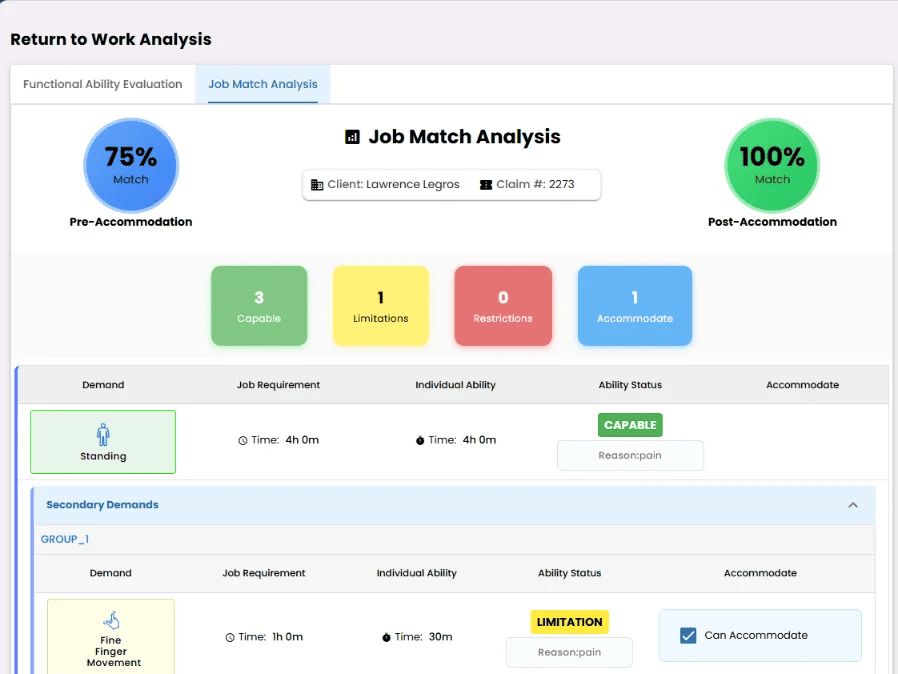
When an employee returns after injury, uncertainty often exists on both sides. Questions arise around readiness, workload, and reintegration pace. Without clear guidance, these moments can feel stressful and unbalanced.
Through Ergoworks Software, return-to-work planning is supported through clear stages. Capabilities are reviewed gradually. Duties are aligned with recovery progress. Communication remains transparent without being intrusive. This structure reflects the intent behind return-to-work software for small businesses, where safety, confidence, and continuity are equally important.
Simplified Digital RTW Programs Suit Smaller Teams
Complex systems often overwhelm lean teams. Multiple dashboards, approvals, and reports slow progress rather than support it. SMEs usually benefit from clarity and simplicity.
Digital RTW programs for small companies are designed with this reality in mind. Steps remain easy to follow. Expectations stay clear. Progress is visible without extensive reporting. Within Ergoworks Software, ergonomics and recovery planning are connected, allowing smoother transitions back into regular work routines.
Cost Considerations Are Balanced Through Long-term Operational Stability
Budget awareness shapes every SME decision. Initial costs are examined carefully. Long-term benefits may feel abstract at first. However, hidden expenses related to injuries, turnover, and prolonged absences often exceed expectations.
Through affordable ergonomics and RTW software, these hidden costs are gradually reduced. Fewer claims occur. Absences shorten. Retention improves as comfort increases. With Ergoworks for small businesses, spending tends to feel predictable and controlled, while outcomes become measurable over time.
Human-centered Design Increases Trust and Participation
Digital systems sometimes raise concerns about impersonality. That perception changes when design feels thoughtful. Language remains simple. Guidance feels supportive rather than instructional. Participation feels voluntary.
Through ergonomic software for SMEs, privacy and dignity are respected. Employees remain involved in decisions affecting their comfort. Ownership is shared rather than imposed. As a result, ergonomics becomes associated with care rather than compliance.
Ergoworks supports sustainable growth for SMEs
Growth brings new challenges. Teams expand. Workloads increase. Physical demands evolve. Solutions that adapt gradually tend to be more sustainable.
With Ergoworks Software, flexibility is maintained as organizations grow. Processes scale without disruption. Support remains consistent across changing roles. Combined with return-to-work software for small businesses and digital RTW programs for small companies, long-term balance is supported without adding operational strain.
Conclusion
Value within SMEs is rarely created through sudden or disruptive change. It is usually built through consistent attention to everyday realities that shape how work feels over time. With Ergoworks for small businesses, physical strain is identified earlier, long before it affects attendance or morale. Recovery pathways feel clearer because guidance remains structured yet flexible.
Workdays become more manageable, not because workloads disappear, but because comfort and support remain present. Through affordable ergonomics and RTW software, stability is maintained without adding pressure or complexity. That quiet reliability allows small teams to focus on growth, continuity, and people-first decision-making, supported responsibly by Bridges Health.
FAQs:
What is Ergoworks for small businesses?
Ergoworks for small businesses gives an ergonomics-based digital interface and recovery support that helps SMEs reduce strain, minimize accidents, and control return-to-work scheduling with a structured, user-friendly application.
Why is ergonomic software for SMEs useful?
Ergonomic software for SMEs assists in identifying physical hazards early, encourages better work practices, and minimizes the disruption caused by untreated discomfort or work-related injuries.
How does Ergoworks Software support recovery?
Ergoworks Software guides gradual reintegration by aligning duties with recovery stages, reducing uncertainty while supporting confidence and safety during return-to-work transitions.
When should return-to-work software be used?
Return-to-work software for small businesses becomes valuable after injury or absence, supporting clear planning, steady reintegration, and reduced risk of reinjury.
How do digital RTW programs help SMEs?
Digital RTW programs for small companies simplify recovery planning, reduce administrative burden, and maintain consistency without overwhelming smaller teams or disrupting daily workflows.
Want to keep learning? Explore more articles related to this topic.